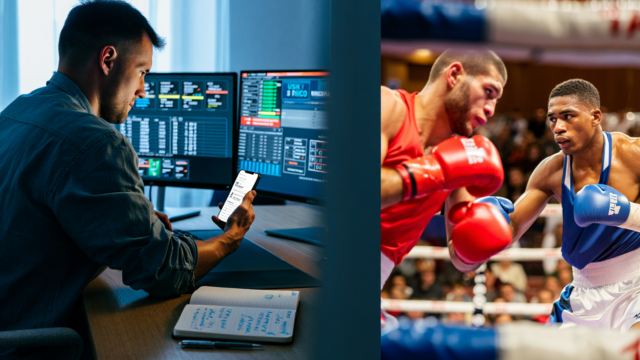

I spent seven years chasing odds. Not just a few casual bets on weekends-I’m talking about daily tracking of matches, injury reports, team statistics, and whatever edge I could find. The money I lost would have paid for a modest car. The time I wasted would have built a real skill. Neither AI sports betting tips nor any algorithm would have changed my trajectory because the problem was never about having better information.
The Trap of Better Predictions
The sports betting market is projected to reach $7.73 billion by 2026, and AI is central to that growth. Machine learning systems now analyze historical statistics, weather conditions, player injuries, live odds movements, and news sentiment in real time. IBM Watson breaks down team composition and performance patterns. Opta Sports feeds live data from sensors and cameras. DraftKings personalizes betting recommendations based on your behavior.
Here’s what happens when you encounter these tools: you don’t feel more informed, you feel more justified. When an AI sports betting GPT model tells you that Arsenal has a 72% probability of winning, you don’t think “this could be wrong.” You think “I found an edge.” The confidence feels different because a computer generated it. That’s the psychological trap. The AI isn’t making you a better bettor-it’s making your losing feel more scientific.
I tested this myself. During my peak betting years, I used predictive models that were genuinely sophisticated. They integrated bookmaker odds, historical matchups, player rating fluctuations, and team form. The accuracy was real. The models occasionally predicted outcomes better than the general public. But here’s what the models couldn’t predict: whether I’d stick to my betting units, avoid chasing losses, or resist the urge to double down on “sure things.” The AI solved one problem while I created ten others.
The False Promise of Zimin Sports Betting and Algorithm Hype
Zimin sports betting strategies and similar AI-driven approaches gained traction because they offered something concrete: a system. Not luck, not gut feeling-a system. The appeal is understandable. Sports betting was supposed to be like poker or chess, where skill separates winners from losers. The data was available. The math worked on paper.
What I didn’t understand back then is that sports betting markets are fundamentally different from chess. Chess is a closed system with perfect information and no randomness. Sports involve injuries that blindside teams, referees making subjective calls, weather shifts, and psychological factors that no sensor can fully capture. Even with deep learning analyzing draft winrates for esports like Counter-Strike 2, Dota 2, and League of Legends, there are still unpredictable human variables.
Machine learning finds statistical patterns in historical data. It doesn’t invent new information. If you’re using the same data source as thousands of other bettors, and bookmakers are adjusting their odds based on that same data, the advantage narrows quickly. The model might have 52% accuracy instead of 50%, but after the bookmaker’s margin (typically 4-5%), you’re still grinding uphill.
I kept increasing my bets hoping the model would eventually break through. This is where AI becomes dangerous. When your system underperforms, the natural impulse is to trust it harder-to bet more, faster. The 2-10 second latency in live betting suddenly feels like an opportunity to squeeze out more edge. But you’re not exploiting the market; you’re exhausting yourself and your bankroll.
Why I Lost, and What the AI Couldn’t Tell Me
Gambling addiction (ludomania) is classified as a non-chemical addiction by the WHO, and I had several of its hallmark symptoms. My interests narrowed. I’d cancel plans to watch matches. I became irritable when I lost, anxious when I couldn’t place bets, and slept poorly on bet days. The bets themselves grew larger as my bankroll shrunk.
The psychological mechanism is brutal. Each loss created a desire to recover it. Each small win reinforced the belief that the next bet would be the big one. The AI model kept spitting out probabilities, and I kept interpreting them as destiny. I wasn’t gambling to make money anymore-I was gambling to feel like I was working toward something.
What no AI sports betting tool can do is measure your emotional state. It can’t tell if you’re betting to win or betting to avoid the shame of previous losses. It can’t detect whether you see betting as a game or as an escape. It can’t monitor whether you’re following your unit size or sneaking in extra bets when stressed. The black-box decision-making that AI systems use for predictions is the same black box I was operating from-irrational, self-deceiving, loss-chasing.
I tried limiting my account deposits. I set weekly betting limits. The app simply became a secondary concern while I opened new accounts elsewhere. Addiction doesn’t respond to friction that you can route around.
The Signs I Ignored (and How to Recognize Them)
The first sign was that betting started displacing other activities. I wasn’t going to the gym as much. I wasn’t reading books. I wasn’t spending real time with friends. Everything was filtered through the betting calendar. “Can’t make Thursday-match day.” “Can’t travel that weekend-important fixtures.”
Next came the withdrawal symptoms. If I didn’t place bets for a few days, I felt restless and anxious. I’d convince myself I was just checking the odds, then I’d place a small wager to scratch the itch. The compulsion wasn’t about expecting profit-it was about needing the action.
The broken promises followed. I told myself I’d quit after losing a certain amount. I didn’t. I said I’d only bet on matches I truly understood. I bet on everything. I promised my partner it was stopping. It wasn’t.
You can test your own relationship with sports betting by trying to avoid placing bets for 1-2 weeks. If you remain calm throughout, you likely don’t have an addiction problem. If you feel irritable, anxious, or constantly thinking about placing bets, that’s a signal worth taking seriously.
How I Actually Quit
The turning point wasn’t discovering a better AI model or a more refined Zimin-style betting system. It was accepting that I didn’t want to win at sports betting-I wanted to stop thinking about it.
I deleted my accounts. Not deactivated, not paused-deleted. I cut off access to the odds pages I’d been refreshing compulsively. I blocked betting websites on my devices. This wasn’t elegant or gradual. It was blunt.
For the first few weeks, the urge remained intense. I’d open my browser and nearly type in betting site URLs before catching myself. I’d see a match schedule and feel that familiar pull. But the friction of having to sign up for a new account was just enough to break the automatic response.
I also had to address what betting had been filling. It was providing a sense of control and engagement that my life otherwise lacked. I started training for a sport instead of analyzing them. I found a project at work that required the same type of pattern-matching I’d been using on statistical models. I spent real time with people instead of explaining odds ratios to them.
The Truth About AI Tools and Edge
The sports betting industry is flooded with AI sports betting GPT bots and predictive tools because they work to some extent. These tools are genuinely useful for bookmakers managing their risk and for serious analytical researchers. But there’s a massive gap between a tool being useful and a tool being profitable for the user.
Bookmakers employ teams of quants running sophisticated AI models specifically to ensure that bettors don’t have a sustainable edge. When AI-driven betting strategies become popular, bookmakers incorporate the same techniques to adjust their odds faster. The edge compresses. The market becomes more efficient.
What actually happens when you use an AI betting tool is that you trade one source of overconfidence for another. Instead of relying on gut feeling, you rely on the model’s confidence interval. Instead of chasing losses after a bad day, you chase them after a bad prediction batch. The mechanics of addiction remain identical; only the rationalization changes.
Moving Forward Without the Illusion
If you’re currently betting on sports, the question isn’t whether AI sports betting tips can save you. The question is whether you want to be saved at all. That sounds harsh, but it matters.
Some people can bet responsibly. They have clear limits, they don’t chase losses, they see it as entertainment with a known cost, and they stick to that boundary. That wasn’t me. I needed to quit entirely because my psychology tilts toward compulsion.
If you suspect you might have a problem, test yourself for a couple of weeks without betting. Notice whether you feel relief or anxiety. Notice whether you can think about matches purely as games rather than as profit opportunities. Notice whether you’d rather spend time researching odds or doing something else.
AI won’t answer these questions for you. No algorithm will know whether you’re betting because you enjoy the sport or because you’re running from something else. No model will tell you when to stop because the metric it’s optimizing-your next bet-isn’t the metric that matters for your life.
I quit because I realized that the real edge in sports betting isn’t finding the right prediction tool. It’s having the honesty to admit when a hobby has become a compulsion, and the courage to walk away from the constant hum of opportunity that these platforms create. The irony is that was my most profitable decision ever-not because I avoided losses, but because I reclaimed the time and money I’d been hemorrhaging.