
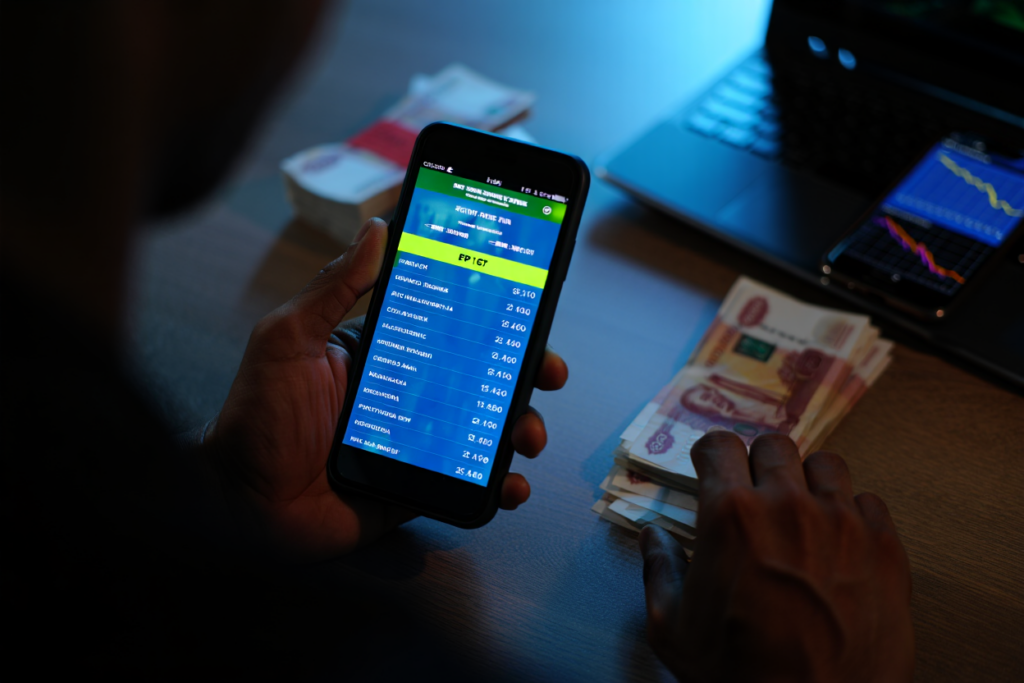
Sports betting platforms promise easy money and thrilling wins. The reality is far messier. Between aggressive marketing, rigged odds, and criminal investigations, the industry operates in murky legal territory while extracting real cash from ordinary people.
The Business Model That Benefits Only the House
Every legitimate sports betting operation works on a simple principle: the house always wins. Bookmakers set odds that guarantee profit regardless of the outcome. When a bettor places money on Team A at -110 odds, the sportsbook has already calculated its margin. Over thousands of bets, this mathematical edge compounds into consistent revenue for the operator while losses accumulate for players.
The average sports bettor loses money. This is not opinion but statistical fact. Professional bettors who consistently profit represent less than 2% of the betting population. For everyone else, the platform’s cut is built into every wager.
How Apps Like Bettery Operate
Bettery, rated 2.5 stars on RuStore with 240 reviews, exemplifies how these services work. The app offers 2000 rubles in free bets to new users-a classic acquisition hook. It covers popular sports including NHL, NBA, tennis, and football with live streaming features. The platform requests extensive permissions: search history, app interactions, device ID, and crash data.
The low user rating reveals consistent frustration. Players complaint about withdrawal delays, odds changes mid-bet, and payouts that never materialize. The app’s developer, OOO Atlantis, operates from Russia where regulatory oversight is minimal.
The “free bet” promotion matters because it costs the app nothing. Money placed with free bet credits cannot be withdrawn as cash-only winnings from those bets qualify for payout. A bettor using 2000 rubles in free bets rarely sees actual money returned. The platform simply recovers its marketing cost through the house edge.
Bloggers and Influencers: The Affiliate Network
Sports betting companies don’t advertise directly anymore. Instead, they pay bloggers and telegram channel operators to promote their apps. Artur’s Blog and similar accounts in the sports betting niche function as affiliate marketers, earning commissions for every user they refer.
This creates a conflict of interest. The blogger benefits when users sign up and lose money. Successful betting tips or honest reviews would discourage signups. Instead, these channels promote the illusion of predictability. They publish “guaranteed” picks, model portfolios showing 80% win rates, and screenshots of large payouts. None of this reflects actual betting outcomes.
The bloggers earn 10-30% commission on referred users’ losses. A single successful referral worth 5000 rubles in lost bets generates 500-1500 rubles for the promoter. Scale this across hundreds of followers, and annual income reaches thousands of dollars-all generated by users losing money.
The Shchekino Case: When Sports Betting Becomes Organized Crime
In Shchekino, Tula region, federal investigators uncovered an illegal gambling operation running from March 2021 through May 2026. Seven residents operated as an organized group, running a clandestine gambling club for three years before authorities moved in.
The FSB seized approximately 3 million rubles in cash, $1,000 in currency, computers, and specialized gambling equipment. All suspects were detained during the operation. The lead organizer faces criminal charges under Russian law prohibiting illegal gambling operations.
This case reveals the infrastructure behind unregulated betting. The seven-person operation generated millions in profit by housing players in a physical location where they could place bets on sports and slots. The operation succeeded for years before detection. Larger, web-based platforms operate with even less oversight.
The Shchekino investigation also suggests that many “sports betting” operations blur into slot machines and casino gambling. Legal classifications matter little to users who lose money either way.
Why Withdrawal Problems Are Systematic, Not Accidental
Sports betting platforms frequently experience “technical issues” when users attempt to withdraw funds. Bettery users report withdrawal delays spanning weeks or indefinitely suspended accounts. These are not glitches.
When a user deposits 5000 rubles and wins 15000, the platform suddenly faces a liquidity problem. Paying out represents a direct loss. Delaying withdrawal keeps the money in the account, where it gets recycled into new bets. Players frustrated by waiting often continue betting rather than pursuing disputes.
Platforms operating without proper licensing have no obligation to pay. A user cannot sue in court because the betting contract itself violates Russian law. The operator accepts money knowing it cannot be legally compelled to return it. This is predatory by design.
The Court Cases and Legal Gray Zone
Multiple court cases in Russia involve sports betting disputes, though specific outcomes vary by jurisdiction. Users have filed complaints against platforms for non-payment, unauthorized account closures, and terms of service violations. Courts increasingly recognize these platforms as operating outside legal frameworks.
In 2024-2026, Russian regulators began cracking down on sports betting promotion. Federal law prohibits unlicensed gambling operations, yet enforcement remains inconsistent. Large platforms operate openly through VPN and offshore infrastructure while small operators get prosecuted for identical conduct.
The legal ambiguity creates a shield for platform operators. They claim to be “information services” rather than gambling providers. They reference terms of service documents written to protect their interests, not users’. When disputes reach court, judges must rule on whether a contract violating federal law is enforceable.
The Psychology: Why People Bet Despite the Odds
Sports betting platforms exploit specific psychological vulnerabilities. Near-misses feel like almost-wins, encouraging continued play. Free bets lower the perceived risk of entry. Live betting creates urgency and emotional investment. Affiliate bloggers narrate success stories while omitting all losing bets.
A bettor placing 500 rubles daily on sports will lose roughly 10000 rubles monthly after accounting for standard odds margins. Over a year, this becomes 120000 rubles in losses. For many users, this accumulates gradually without clear awareness. The small daily amount feels manageable. The total loss only becomes visible after months or years.
Alternative Platforms and the Illusion of Choice
Users seeking alternatives often switch between platforms-Bettery, 1xBet, Liga, and dozens of others. Each app promises better odds or faster payouts. None fundamentally differ. All operate on the same mathematical certainty: bettors lose.
Switching platforms doesn’t change the underlying economics. A user averaging 45% win rate on Platform A will average 45% on Platform B. The house edge remains constant. The bettor simply extends their losses across more services while each operator captures a commission.
What Legitimate Sports Betting Would Look Like
Licensed sportsbooks in regulated markets like Nevada, New Jersey, or the UK operate under government oversight. They must maintain customer deposits in segregated accounts. They face regular audits and license suspension for non-payment. Bettors can file complaints with state gaming commissions.
These safeguards cost money. Licensed platforms charge higher margins to cover compliance costs. Their odds are frequently worse than unlicensed competitors. But users receive legal recourse when disputes arise.
Russia has no framework for licensed sports betting. Users choosing to bet anyway accept complete absence of protection.
The Bottom Line
Sports betting is not inherently fraudulent, but the Russian ecosystem operates as one. Unlicensed platforms with opaque ownership structures accept deposits without legal obligation to pay. Affiliate marketers promote these services for personal profit rather than user benefit. Law enforcement pursues some operations while others function openly. Court cases accumulate as players seek recovery of lost funds through the legal system.
An individual can win on any given bet. Over time, mathematics guarantees loss. The platforms, bloggers, and affiliate networks profit from this certainty while users absorb all risk. This is not gambling-it is transfer of wealth from players to operators under the guise of sport.