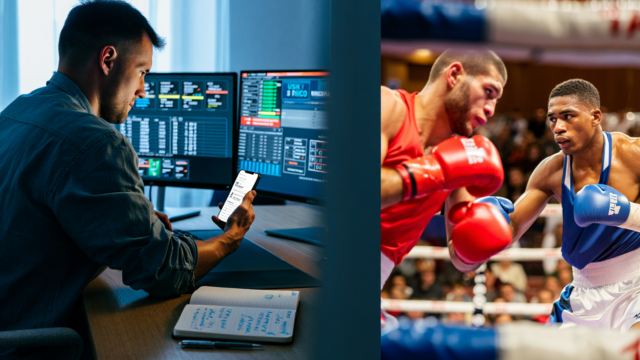

The morning coffee ritual for many bettors now includes checking overnight sports betting picks for today. Basketball games in Europe wrap up their first halves while American leagues prepare for evening tip-offs. Barcelona’s composed performance against Valencia yesterday illustrates what experienced bettors look for: controlled execution, strong rotation depth, and the ability to adjust. Valencia’s younger squad showed physical dominance but lacked composure in crucial moments. When evaluating morning sports betting for today, these patterns matter more than gut feelings.
Shengelia, Vesely, Claiborne, Parra, and Laprovittola dominated the stat sheets. Barcelona’s free throw execution lagged at 6-7 misses in the opening half, a metric worth monitoring before placing morning wagers. Such visible weaknesses often correct in subsequent games, shifting the value proposition entirely.
How AI Sports Betting Analyzers Actually Work
An AI sports betting analyzer doesn’t predict the future. Instead, it processes what happened before. Machine learning algorithms consume historical data, identifying patterns that human eyes miss. Real-time statistical models assess current game conditions, player performance trends, and injury impacts simultaneously.
Pundit AI and similar tools operate on probability analysis rather than certainty. They assign confidence levels to outcomes, highlighting where bookmaker odds diverge from calculated fairness. A model might conclude that a team carries 58% true winning probability while the sportsbook offers -110 odds reflecting only 52.4% probability. This gap creates what bettors call “value.”
The human emotion problem vanishes with these systems. No drunk 2 AM bet because your team is “definitely going to cover.” No chasing losses with reckless doubles. The analyzer suggests plays based on data, and disciplined bettors execute or decline based on their bankroll rules. Risk management becomes mathematical: if the algorithm suggests a 4% edge on a particular match, your unit sizing adjusts accordingly.
Transparency separates legitimate AI tools from black boxes. Good analyzers show their reasoning: projected team rating plus 3.2, opponent weakness in bench defense minus 1.8, fatigue factor minus 0.6, resulting in a 1.8-point lean. You see the components. You can argue with them. You maintain control.
Understanding Toto Sports Betting and Pooled Systems
Toto betting originated from a concept Joseph Oller formalized in the 1800s: combine all wagers into a single pool, deduct the organizer’s commission, and distribute remaining money among winners proportionally. This structure means the betting office bears zero risk. Whether your ticket wins or loses, they collect their percentage upfront.
A mechanical computing machine around 1900 automated payout calculations. Modern totalizators operate identically in principle, though digitally. You select multiple match outcomes, typically 6-13 games across various sports. Your payout depends entirely on how many other tickets matched your exact selections. If 200 people picked the same six outcomes you did, the prize divides 200 ways.
Toto sports betting differs fundamentally from traditional fixed-odds betting. A sportsbook offers -110 odds on one side; you know exactly what you win or lose before placing the bet. Toto odds remain unknown until the betting window closes and organizers determine how many tickets matched each outcome tier. This uncertainty frustrates some bettors but attracts others seeking massive payouts. A €5 ticket matching all eight selections might return €15,000 if few others predicted that combination.
The organizer’s margin ranges from 15% to 25% depending on jurisdiction and sport. This structural disadvantage explains why professional bettors focus on fixed-odds markets. Still, recreational players enjoy toto games for entertainment, accepting the house edge as a fee for the possibility of life-changing returns.
Why Sports Betting Memes Dominate Morning Scrolls
The sports betting internet generates endless comedy because losing is universal and instant. A bettor places a parlay on five games, wins the first four decisively, and watches the final team blow a fourth-quarter lead. Memes capture this specific pain with brutal accuracy: the euphoria turning to despair in 120 seconds.
One recurring format shows two images side-by-side. First photo: confident bettor reviewing their 8-leg parlay that “definitely hits.” Second photo: same person 45 minutes later, watching leg seven collapse. The caption reads something like “Me at 10 AM vs. Me at 10:47 AM.” These circulate heavily on Reddit’s r/sportsbook, Twitter sports betting communities, and betting app forums.
Another classic format features a player making a terrible shot with the caption “My bankroll after I chase my losses with three straight -180 favorites.” The absurdity of the self-sabotage resonates because nearly everyone has done exactly that. You lose €40 on one play, so you immediately bet €60 on a “lock” that isn’t a lock. The meme acknowledges this foolishness without judgment.
Betting apps have joined the meme game themselves. Some sportsbooks publish deliberately terrible parlay suggestions to their social accounts, captioned “Please don’t do this.” The humor deflates tension around the activity’s inherent losses.
The funniest memes about sports betting recognize a simple truth: the bookmakers’ edge isn’t based on some mathematical secret. It’s based on our emotions. They profit because we place bets we shouldn’t after we’ve lost, chase losses with worse decisions, and overestimate our predictive ability. A well-crafted meme that shows this honestly generates thousands of shares because everyone sees themselves reflected.
Building a Practical Morning Betting Routine
Check injury reports before anything else. A starting guard ruled out transforms the entire statistical profile. Morning picks circulate before this news fully disseminates, creating outdated recommendations.
Review the AI analyzer’s top-confidence plays, then verify the reasoning independently. If the model loves a spread because one team’s bench outscores opponents’ starters by 4.2 points, confirm that sample size exceeds 10 games. A three-game anomaly isn’t a pattern.
Allocate unit sizes before noon, while your mind is fresh. A common error: starting with disciplined 2% units, then increasing to 5% units after a loss, then 10% units after another loss. By evening, you’re betting recklessly and losing your monthly profit in one session.
Skip parlay betting before you’ve mastered straight sides. Parlays multiply both variance and bookmaker profit. Two -110 plays combined hit 25% of the time; each hit separately about 47.6% of the time. That’s a -290 play approximately, far worse than simply playing two separate -110 wagers.
Distinguish between entertainment bets and investment bets. A €10 toto ticket on eight matches you’re watching anyway? Entertainment. A unit-sized straight on a play your AI system flagged at +4% expected value? Investment. Keep the categories separate in your mind.
The Reality Check
Sports betting for today starts with yesterday’s data. Barcelona beat Valencia because experience, depth, and composure beat youth and athleticism. AI analyzers found value because they spotted that sportsbooks overreacted to Valencia’s first-half performance. Toto bettors occasionally hit massive payouts by correctly predicting multiple outcomes others missed. And memes remain funny because they show us ourselves.
The morning betting routine succeeds when you accept that nobody wins every day. The bookmakers’ edge isn’t mysterious. It exists because most bettors make decisions based on feelings, not data. AI tools remove emotion from analysis. Discipline removes emotion from execution. Everything else is just hoping.